How to See Wild Dolphins in Florida: The Complete Guide to Finding Them on Your Own (2026)

Salty's Water Sports Team
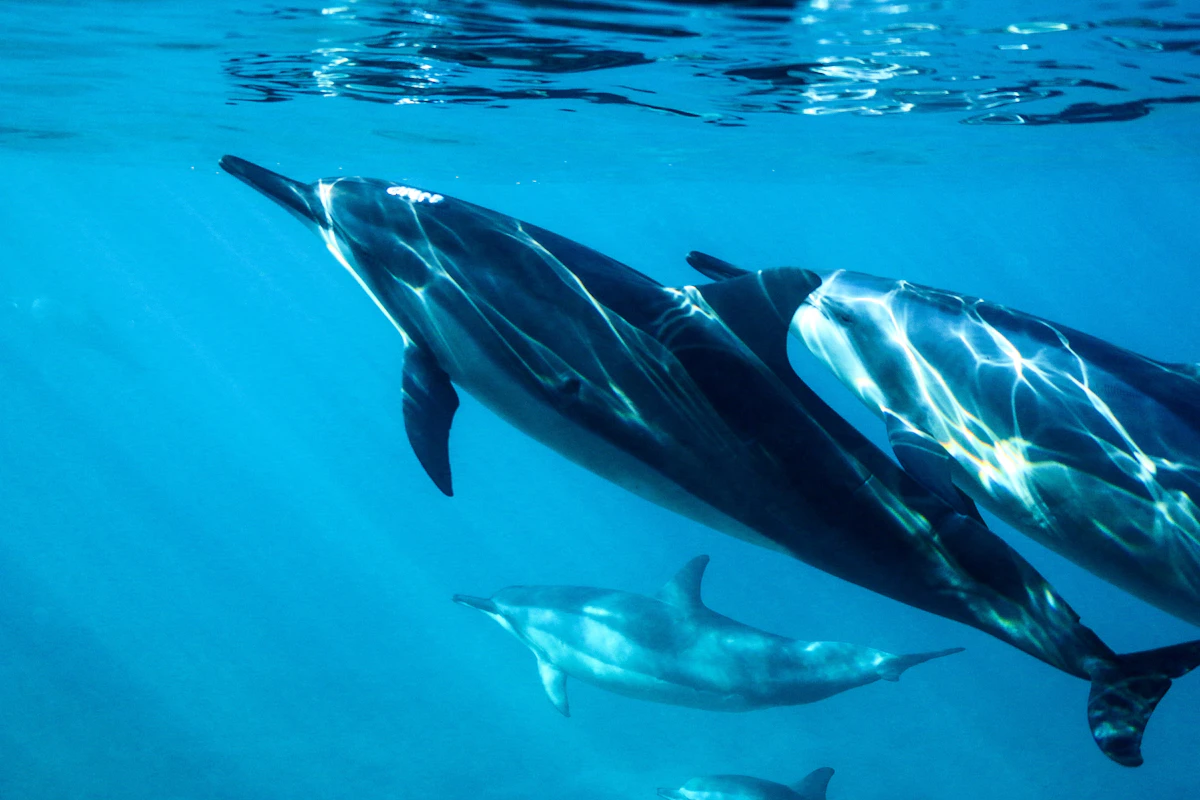
Florida has one of the highest concentrations of wild bottlenose dolphins in the world — an estimated 8,000–10,000 dolphins live in Florida's coastal waters, and they're present year-round in the bays, inlets, and estuaries along both coasts. But knowing that dolphins are out there and actually finding them are two different things. The best dolphin sightings in Florida aren't random — they happen in specific places, at specific times, for specific reasons that have everything to do with food, habitat, and the dolphins' daily routines. This guide covers everything you need to know to find wild dolphins in Florida, whether you're looking from shore, from a kayak, or from a boat — and why the Indian River Lagoon's dolphin nursery, where Salty's Water Sports operates with a 95% sighting rate, is the single best dolphin-watching destination in the state.
Where Wild Dolphins Live in Florida: The Science of Habitat
Florida's bottlenose dolphins (Tursiops truncatus) are not randomly distributed across the state's coastal waters. They concentrate in specific habitats based on food availability, water temperature, and social structure. Understanding these patterns is the key to finding them reliably.
Estuaries and lagoons are the most productive dolphin habitats in Florida. Estuaries — where freshwater rivers meet saltwater — create nutrient-rich environments that support large populations of mullet, pinfish, and other small fish that dolphins prey on. The Indian River Lagoon on Florida's east coast is the best example: a 156-mile estuary that supports a resident population of approximately 1,000 dolphins, organized into stable social groups that have been studied by researchers for decades. The lagoon's shallow, warm water and abundant food supply make it ideal dolphin habitat year-round.
Tidal inlets are the second most productive dolphin habitat. When the tide moves through an inlet — the channel connecting a lagoon or bay to the open ocean — it concentrates baitfish in the current, and dolphins follow. Sebastian Inlet, Fort Pierce Inlet, and St. Lucie Inlet on the Treasure Coast are all productive dolphin-watching spots, particularly during the two hours before and after low tide when the tidal flow is strongest.
Sandbars and shallow flats are where dolphins engage in their most dramatic feeding behavior — strand feeding, where a group of dolphins works together to drive fish onto a shallow beach or sandbar, then slides partially out of the water to grab the fish before sliding back. This behavior is most common in the Indian River Lagoon and in the shallow bays of the Florida Panhandle. It's one of the most extraordinary wildlife spectacles in North America, and it's almost exclusively a lagoon phenomenon.
The Indian River Lagoon: Florida's Best Dolphin Destination
The Indian River Lagoon is the best place to see wild dolphins in Florida — and it's not particularly close. The lagoon's resident dolphin population of approximately 1,000 animals is one of the most studied in the world, with individual dolphins identified by their dorsal fin markings and tracked by researchers at Florida Atlantic University's Harbor Branch Oceanographic Institute. The guides at Salty's Water Sports know many of these dolphins by name — they've been watching the same pods for years, and they know where each group feeds, rests, and socializes at different times of day and different seasons.
The section of the lagoon between Fort Pierce and Jensen Beach is the primary dolphin nursery of the Treasure Coast — the area where female dolphins bring their calves to feed in the shallow, protected waters away from the ocean's currents and predators. Calves are born year-round in the lagoon, and the nursery groups — typically 3–8 females with calves — are the most reliably located of all the lagoon's dolphin groups. Salty's guides know where the nursery groups feed at different times of day, which is the primary reason for the 95% dolphin sighting rate on guided tours.
The lagoon also supports bachelor groups of young male dolphins, large mixed-sex feeding groups that form around schools of mullet, and solitary adult males that patrol their own territories. The social complexity of the lagoon's dolphin population means that every tour offers something different — different behaviors, different group compositions, different interactions. No two tours are the same.
Best Times of Day and Year to See Dolphins in Florida
Time of day: Early morning (7–10 AM) is consistently the best time to see dolphins in Florida. Dolphins are most active in the early morning, when they're actively feeding after the overnight rest period. The light is also better for photography in the morning — the low angle of the sun creates warm, golden light that makes dolphin photos significantly more dramatic than midday shots. Afternoon tours (2–5 PM) are the second-best option, when dolphins often resume feeding before sunset. Midday (11 AM–1 PM) is typically the slowest period, when dolphins are more likely to be resting or traveling rather than feeding.
Season: Dolphins are present in the Indian River Lagoon year-round, but the best viewing conditions vary by season. October through April offers the clearest water (lower algae levels), the most active feeding behavior (cooler water temperatures increase fish activity), and the highest concentration of dolphins in the lagoon's northern sections. May through September offers calmer morning conditions, higher water temperatures that bring dolphins into the shallower sections of the lagoon, and the highest probability of seeing calves born in the spring. Summer mornings on the lagoon are particularly beautiful — flat, glassy water and warm light create ideal conditions for dolphin watching.
How to Find Dolphins on Your Own in Florida
If you want to find dolphins without a guide, the most reliable approach is to position yourself near a tidal inlet during the two hours before and after low tide and watch the current for feeding activity. Dolphins feeding in a tidal current are visible from a distance — look for splashing, arcing dorsal fins, and the characteristic "blow" (the puff of mist when a dolphin exhales) above the water surface. Binoculars are helpful for scanning the water from shore.
From a kayak or paddleboard, the best approach is to paddle slowly along the edges of seagrass beds in the early morning, staying in water that's 3–6 feet deep. Dolphins feeding on the seagrass flats often approach kayakers out of curiosity — the key is to stay still and let them come to you rather than paddling toward them. Approaching dolphins within 50 yards is prohibited under the Marine Mammal Protection Act (see below), but dolphins that approach you on their own initiative are not subject to this restriction.
From a boat, the most productive approach is to follow the birds. Pelicans, terns, and cormorants feeding on the surface indicate a school of baitfish below — and where there are baitfish, there are usually dolphins. Circling birds are the most reliable indicator of active dolphin feeding, and positioning your boat downwind of the birds (so the noise of your engine doesn't spook the fish) gives you the best chance of seeing the dolphins before they move on.
The Marine Mammal Protection Act: What You Can and Can't Do
Wild dolphins in Florida are protected by the Marine Mammal Protection Act (MMPA), a federal law that prohibits harassing, hunting, capturing, or killing marine mammals. In practical terms, the MMPA means that you cannot intentionally approach dolphins within 50 yards, feed them, swim with them, or take any action that disrupts their natural behavior. Violations can result in fines of up to $100,000 and criminal prosecution.
The "50-yard rule" is the most commonly misunderstood aspect of the MMPA. The rule applies to intentional approaches — if you're paddling or boating and dolphins approach you, you're not in violation. The rule is violated when you actively pursue dolphins, repeatedly approach them, or position your vessel between a mother and calf. The NOAA Fisheries Service enforces the MMPA in Florida, and violations are taken seriously.
Feeding wild dolphins is the most serious violation of the MMPA. Fed dolphins lose their natural wariness of humans and boats, become dependent on handouts, and are significantly more likely to be struck by boat propellers. Several dolphin deaths in the Indian River Lagoon have been directly attributed to feeding by well-intentioned visitors. Never feed wild dolphins, and report anyone you see doing so to NOAA Fisheries at 1-800-853-1964.
Guided Dolphin Tours vs. Finding Dolphins on Your Own
The honest answer is that a guided tour dramatically increases your chances of a meaningful dolphin encounter. The difference between a 95% sighting rate (Salty's guided tours) and a self-guided attempt isn't luck — it's the guide's knowledge of the lagoon's resident dolphin population, their daily patterns, and their current locations. A guide who has been watching the same dolphin pods for years can position the group within 20 feet of a feeding pod in minutes, while a self-guided visitor might spend an hour scanning the lagoon without seeing anything.
Salty's Water Sports offers two guided dolphin tour formats from 5 Treasure Coast locations (Fort Pierce, Jensen Beach, Sebastian, Port St. Lucie, and Vero Beach). The Jet Ski Dolphin Tour puts you on your own Sea-Doo GTX, following a USCG-licensed guide through the dolphin nursery at close range — the most immersive way to experience the lagoon's dolphins. The Dolphin Boat Tour is a private pontoon boat charter for up to 12 guests, with a naturalist captain who narrates the experience. Both tours have a 95% dolphin sighting rate and are available year-round. Book at saltyswatersports.com or call (772) 448-4516.
Frequently Asked Questions
Where is the best place to see wild dolphins in Florida?
The Indian River Lagoon on Florida's east coast is the best place to see wild dolphins in Florida. The lagoon supports a resident population of approximately 1,000 bottlenose dolphins, organized into stable social groups that are present year-round. The section between Fort Pierce and Jensen Beach is the primary dolphin nursery of the Treasure Coast, where female dolphins bring their calves to feed in the shallow, protected waters. Salty's Water Sports operates guided dolphin tours from this section of the lagoon with a 95% sighting rate — the highest of any operator on the Treasure Coast.
What time of day is best to see dolphins in Florida?
Early morning (7–10 AM) is the best time to see dolphins in Florida. Dolphins are most active in the early morning when they're feeding after the overnight rest period, the water is calmest, and the light is best for photography. Afternoon (2–5 PM) is the second-best window. Midday is typically the slowest period. Salty's Water Sports offers morning tours from all 5 Treasure Coast locations — book the earliest available slot for the best sighting rates and calmest water conditions.
Can you swim with wild dolphins in Florida?
Swimming with wild dolphins is illegal under the Marine Mammal Protection Act (MMPA). The MMPA prohibits any intentional approach within 50 yards of wild dolphins, and swimming toward or with wild dolphins constitutes harassment under the law. Violations can result in fines up to $100,000. If wild dolphins approach you while you're swimming or snorkeling, you're not in violation — but you cannot pursue them. Captive dolphin swim programs (at marine parks and aquariums) are legal and operate under USDA permits, but wild dolphin swimming is prohibited throughout the United States.
Are there dolphins in the Indian River Lagoon year-round?
Yes — the Indian River Lagoon has a resident dolphin population of approximately 1,000 animals that are present year-round. Unlike migratory whale species, the lagoon's bottlenose dolphins are permanent residents that live, feed, and raise their calves in the same sections of the lagoon throughout the year. The best viewing conditions are October through April (clearest water, most active feeding), but dolphin sightings are reliable in every month. Salty's Water Sports maintains a 95% dolphin sighting rate year-round from its 5 Treasure Coast locations.
Ready to Plan Your Treasure Coast Adventure?
Choose your Salty's experience, select the most convenient launch location, and reserve online. Questions? Call (772) 448-4516.