Why Salty's Uses Sea-Doo GTX: The Best Jet Ski for Florida Lagoon Riding

Salty's Water Sports Team
When Salty's Water Sports built its fleet, the choice of jet ski wasn't arbitrary. The Sea-Doo GTX is the best touring personal watercraft on the market for lagoon riding — and the reasons go well beyond horsepower. The GTX's wide, stable hull, its intelligent braking system, its three-passenger capacity, and its 170+ horsepower Rotax engine make it the right tool for the Indian River Lagoon's calm, shallow, wildlife-rich waters. If you've ever wondered why Salty's doesn't use Yamaha WaveRunners or older Sea-Doo models, this post explains the decision in detail — and what it means for your experience when you rent from us.
What Is the Sea-Doo GTX?
The Sea-Doo GTX is BRP's flagship touring personal watercraft — a three-passenger, full-size jet ski designed for comfort, stability, and extended time on the water. It sits at the top of Sea-Doo's touring lineup, above the GTI series, and is built around a fundamentally different philosophy than performance-oriented models like the RXP-X or the Spark. Where performance models prioritize speed and agility, the GTX prioritizes stability, comfort, and confidence — exactly the qualities that matter most in a rental context on a calm, shallow lagoon.
The 2025–2026 GTX is powered by a 1,630cc Rotax three-cylinder engine producing 170 horsepower in the base model, with supercharged versions producing up to 325 horsepower. The base 170 HP model is the right choice for rentals — it has more than enough power for lagoon riding, dolphin tours, and exploring the waterway, while remaining manageable for first-time riders. The GTX's hull is Sea-Doo's ST3 touring platform — a wide, deep-V design that provides exceptional stability in flat water and predictable handling at speed.
Sea-Doo GTX vs. Yamaha WaveRunner: The Key Differences
The two dominant brands in the personal watercraft market are Sea-Doo (made by BRP, the Canadian powersports company) and Yamaha (the Japanese manufacturer whose jet skis are marketed as WaveRunners). Both make excellent machines, but they reflect different engineering philosophies — and for lagoon rental use, the differences matter.
The most significant difference is the hull design. Sea-Doo's ST3 hull on the GTX is wider and more stable than Yamaha's comparable hull on the VX Cruiser or FX Cruiser. This translates directly to rider confidence — first-time riders on a GTX feel stable and in control almost immediately, while the narrower Yamaha hulls require more active balance management. On the calm waters of the Indian River Lagoon, this difference is less critical than in ocean conditions, but it still matters for the quality of the experience, especially for riders who are nervous about water or who are riding with a passenger.
The second major difference is the braking system. Sea-Doo's iBR (Intelligent Brake and Reverse) system is the most advanced braking technology in the personal watercraft industry. When you release the throttle and squeeze the brake lever, the iBR system engages a reverse bucket that acts as a genuine brake — stopping the GTX in approximately 100 feet from 30 mph. Yamaha's RiDE system provides similar functionality on some models, but the iBR system on the GTX is more refined and more intuitive. In a rental context, where riders may encounter unexpected obstacles — a manatee surfacing nearby, a kayaker crossing the path, a no-wake zone marker — the ability to stop quickly is a genuine safety advantage.
The third difference is storage and comfort. The GTX has 26.1 gallons of storage — more than any comparable Yamaha model — with a large front storage compartment, a rear storage area, and a LinQ attachment system for accessories. The Ergolock seat system provides a more secure, comfortable riding position for both the driver and passengers, with contoured seating that reduces fatigue on longer rides. The GTX's 18.5-gallon fuel tank gives it a range of approximately 4–5 hours at moderate speeds — more than enough for a full day of lagoon exploration without refueling.
Sea-Doo GTX vs. Older Sea-Doo Models: Why Fleet Age Matters
Not all Sea-Doo GTX rentals are equal. An older GTX from 2018 or 2019 is a fundamentally different machine from a 2024 or 2025 model — the technology, the reliability, and the riding experience have all improved significantly over the past several model years. Salty's Water Sports maintains a current-model-year fleet, which means you're riding the latest version of the GTX with the most current safety technology, the most reliable engine, and the best overall condition.
The practical implications of fleet age are significant. Older jet skis accumulate wear on the hull, the engine, the impeller, and the steering system — wear that affects handling, reliability, and the overall quality of the experience. A well-maintained older machine can still perform well, but the maintenance burden increases with age, and the risk of mechanical issues during a rental increases accordingly. Salty's commitment to a current-model fleet means that every machine you ride has been through a recent service cycle and is operating at factory specification.
The newer GTX models also have significantly improved electronics. The 2024–2026 GTX includes a 7.8-inch touchscreen display (on higher trim levels), Bluetooth audio, a digital key system, and Sea-Doo's latest LinQ accessory integration. The base rental models don't include all of these features, but the underlying engine, hull, and safety systems are current-generation — which is what matters most for a rental experience.
Why the GTX Is the Right Jet Ski for the Indian River Lagoon
The Indian River Lagoon presents a specific set of conditions that make the GTX the ideal rental machine. The lagoon is shallow — averaging 4 feet deep — which means the GTX's hull draft and impeller design need to be appropriate for shallow-water operation. The GTX's pump jet propulsion system (like all modern jet skis) draws water through an intake grate and expels it through a nozzle — a design that is inherently safe in shallow water, with no exposed propeller that could harm wildlife or riders. The GTX's draft is approximately 12 inches, which means it can operate safely in water as shallow as 18–24 inches.
The lagoon's calm, flat water is where the GTX's stability advantage is most apparent. Without ocean swell or significant chop, the GTX's wide hull provides a rock-solid platform that allows riders to focus on the scenery and the wildlife rather than on maintaining balance. The smooth throttle response of the Rotax engine makes it easy to modulate speed — important when approaching manatee protection zones or slowing down near dolphin pods. The iBR braking system allows quick stops when wildlife surfaces unexpectedly.
The GTX's three-passenger capacity is also relevant for the lagoon experience. Many visitors want to ride with a partner or a child, and the GTX's three-up seating configuration accommodates this comfortably. The Ergolock seat system keeps passengers secure even at higher speeds, and the wide hull provides enough stability for a passenger to shift their weight without destabilizing the machine.
What to Expect When You Ride a GTX at Salty's
When you arrive at any Salty's Water Sports location, you'll receive a thorough orientation on the GTX before you get on the water. The orientation covers the throttle, the iBR braking system, the steering, the no-wake zones and manatee protection areas on the lagoon, and the tour route if you're on a guided dolphin tour. First-time riders typically feel comfortable on the GTX within the first 5 minutes — the machine's stability and intuitive controls make the learning curve very short.
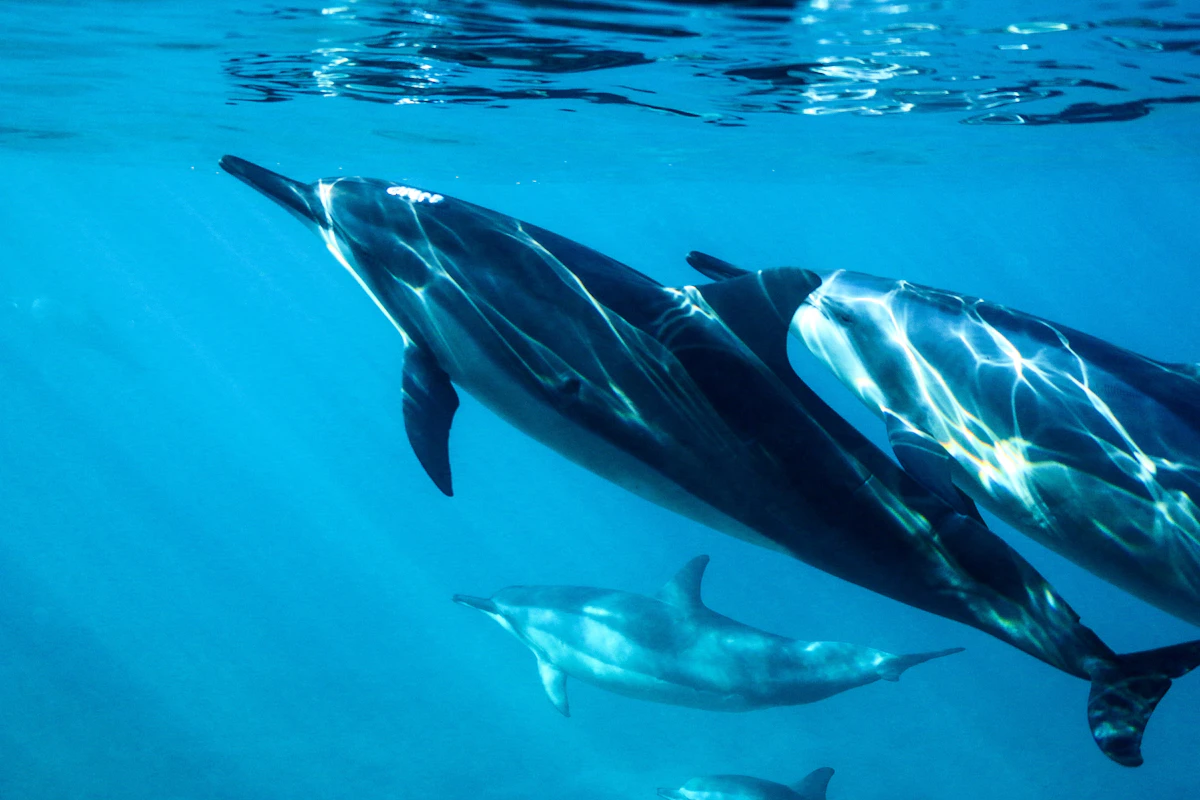
The GTX's power is immediately apparent when you open the throttle on the open lagoon. The 170 HP Rotax engine accelerates the machine to cruising speed (30–40 mph) quickly and smoothly, with a top speed of approximately 67 mph. For lagoon riding, most guests cruise at 25–35 mph — fast enough to feel exhilarating, slow enough to take in the scenery and spot wildlife. The guided dolphin tours operate at lower speeds — typically 15–20 mph when following the guide and slower when dolphins are nearby.
Book your GTX rental or guided dolphin tour at saltyswatersports.com or call (772) 448-4516. Salty's operates from 5 Treasure Coast locations: Fort Pierce, Jensen Beach, Sebastian, Port St. Lucie, and Vero Beach. Morning slots offer the calmest water and the best wildlife sighting rates.
Frequently Asked Questions
What jet ski does Salty's Water Sports use?
Salty's Water Sports uses Sea-Doo GTX personal watercraft across its entire fleet at all 5 Treasure Coast locations. The GTX is Sea-Doo's flagship touring model — the most stable, most comfortable, and most capable jet ski for lagoon riding. Salty's maintains a current-model-year fleet to ensure every machine is operating at factory specification with the latest safety technology.
Is the Sea-Doo GTX good for beginners?
Yes — the Sea-Doo GTX is one of the best jet skis for beginners. Its wide ST3 hull provides exceptional stability, its iBR (Intelligent Brake and Reverse) system allows genuine braking for quick stops, and its smooth throttle response makes it easy to control at low speeds. Most first-time riders feel comfortable on the GTX within 5 minutes. Salty's USCG-licensed guides provide a thorough orientation before every rental, and the calm, shallow waters of the Indian River Lagoon are an ideal environment for first-time riders.
How fast does the Sea-Doo GTX go?
The Sea-Doo GTX 170 (the base model used in Salty's rental fleet) has a top speed of approximately 67 mph. For lagoon riding, most guests cruise at 25–35 mph — fast enough to feel exhilarating while still being able to enjoy the scenery and spot wildlife. The guided dolphin tours operate at 15–20 mph when following the guide and slower when dolphins are nearby. The GTX's 170 HP Rotax engine provides strong acceleration from a stop and smooth, linear power delivery throughout the speed range.
Can two people ride a Sea-Doo GTX?
Yes — the Sea-Doo GTX is designed for up to three passengers. The Ergolock seat system provides a secure, comfortable riding position for both the driver and passengers, with contoured seating that reduces fatigue on longer rides. Two-person riding is the most common configuration at Salty's — couples, friends, and parents with children all ride two-up on the GTX. The wide hull provides enough stability for a passenger to shift their weight without destabilizing the machine.
Ready to Plan Your Treasure Coast Adventure?
Choose your Salty's experience, select the most convenient launch location, and reserve online. Questions? Call (772) 448-4516.